Biology, Chemistry
& Physics Tuition

My doctoral research in Scientific Archaeology involves the practical application of biology, chemistry, and physics every day. I teach all three sciences from first principles, grounded in the authority of someone who uses them professionally, not theoretically.

🔬
KS3 to A-Level
🧬
Practising Scientist
🔭
PhD Researcher

Science taught by a working scientist

Too often, science is taught as a set of facts to memorise. That approach might scrape a pass, but it does not produce the understanding needed for higher grades or for A-Level study. I teach the sciences as interconnected disciplines built on observation, logic, and evidence, because that is what they are and how I practise them.

My doctoral research in Scientific Archaeology sits at the intersection of all three sciences. I analyse ancient materials using optical and electron microscopy (physics), investigate their chemical composition through spectroscopic techniques (chemistry), and study biological processes such as wood degradation and organic preservation (biology). This means that when I teach these subjects, I draw on real research experience, not a textbook summary.

At KS3, I build the conceptual foundations that make GCSE study manageable. Topics such as particle theory, forces, cells, and chemical reactions are introduced carefully, with emphasis on understanding the underlying principles rather than learning disconnected facts.

At GCSE, I cover the full range of topics required by the major exam boards, including required practicals and the mathematical skills that increasingly feature in science papers. I teach pupils how to answer the six-mark extended response questions that many find challenging, and I ensure they are comfortable with graph interpretation, calculation, and data analysis.

At A-Level, the depth and mathematical demand increase substantially. I support pupils through the transition, building on GCSE knowledge and extending it into more rigorous territory. Whether the topic is enzyme kinetics, electrochemistry, or wave-particle duality, I ensure that understanding comes before application.
KS3GCSEA-Level
AQAEdexcelOCRWJECCIE
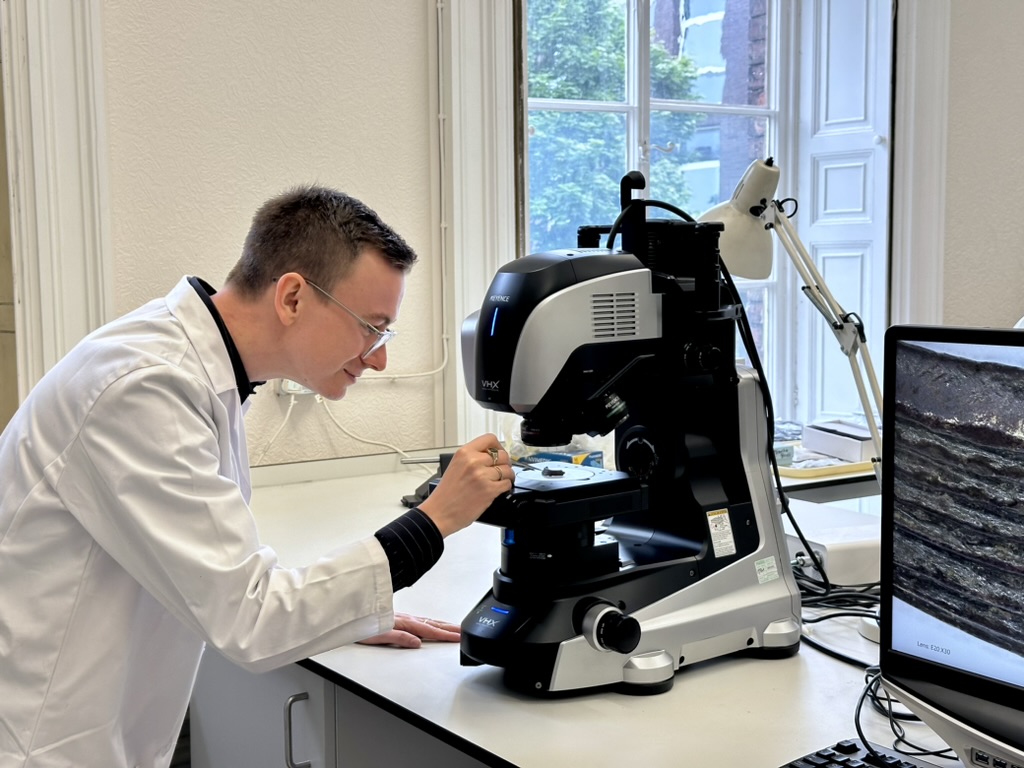
Jordan using microscope in laboratory
Key topics and skills
Each area is taught with the same depth and attention to the pupil's specific level, goals, and examination requirements.

Biology

Cell biology, organisation, infection and response, bioenergetics, homeostasis, inheritance, variation, evolution, and ecology.

Chemistry

Atomic structure, bonding, quantitative chemistry, chemical changes, energy changes, rates, organic chemistry, and chemical analysis.

Physics

Energy, electricity, particle model, atomic structure, forces, waves, magnetism, and the electromagnetic spectrum.

Required Practicals

Preparation for the assessed practical skills, including method, variables, data handling, and evaluation.

Mathematical Skills in Science

Rearranging formulae, significant figures, unit conversions, graph plotting, and statistical analysis as applied in science contexts.

Extended Response Questions

Structuring six-mark answers with logical flow, correct terminology, and sufficient depth for full marks.

★ ★ ★ ★ ★
"It's rare to find a tutor who can navigate all three sciences with such ease. Jordan's background in archaeological science brings a real-world perspective to the lessons. He explains Physics concepts using analogies that actually make sense. I went into my Chemistry practicals feeling so much more confident."
Harry FletcherYear 11 — Triple Science GCSE
★ ★ ★ ★ ★
"Jordan is brilliant — patient, punctual, and clearly loves his subject. My daughter's understanding of complex genetics has tripled since they started. He has a lovely way of challenging her without it being stressful."
Dr. Elizabeth MooreParent — A-Level Biology
★ ★ ★ ★ ★
"Jordan makes Science fun! He's always complimentary about Freddie's ideas and keeps him engaged for the full hour, which isn't easy with a Year 8 boy!"
Mrs. G. LewisParent — Year 8, KS3 Science
How I teach
this subject

First principles

Every topic begins with the foundational concept. Pupils understand the science before they practise exam technique.

Real-world examples

I draw on my research experience to show how science operates outside the classroom, making abstract ideas tangible.

Practical skills

Required practicals and investigative skills are taught with the same rigour as content knowledge.

Targeted exam preparation

Past paper work with mark-scheme analysis, focusing on the specific demands of each paper and question type.

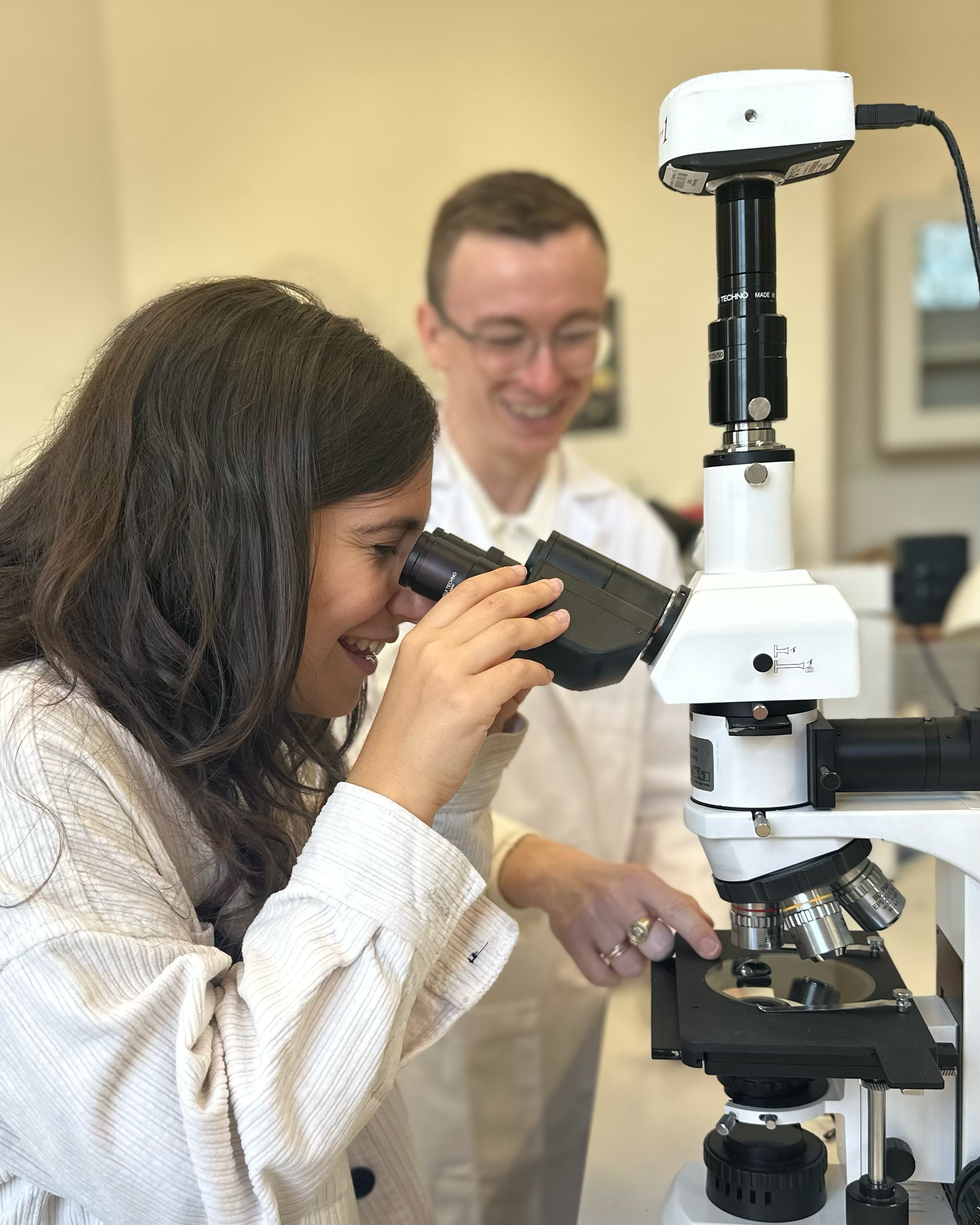
Student using microscope in laboratory session
You may also be interested in
Book your free consultation
Send me a message and I will respond within 24 hours. Initial consultations are free and carry no obligation.